2022-04-16

Salus populi suprema lex

PXL_20220413_174256775A placeholder post to keep Tom off my back while I write up Aristotle's Physics3.

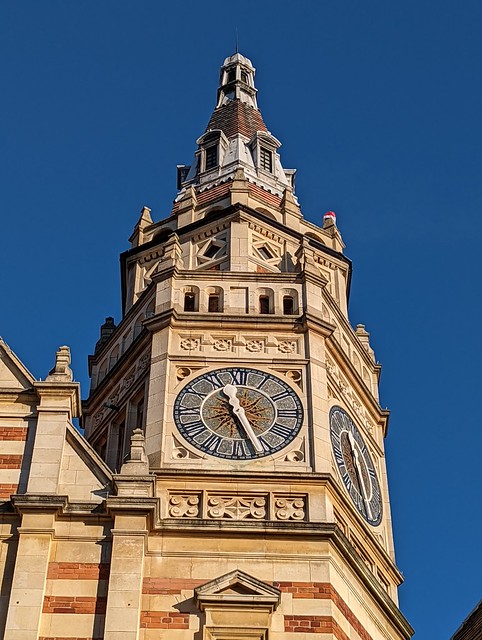
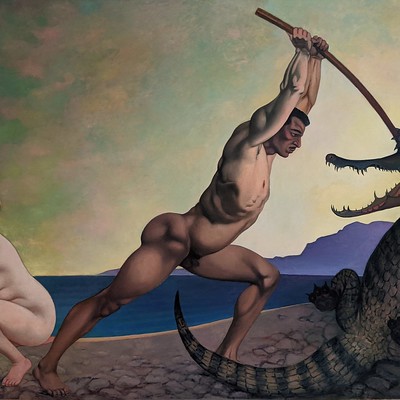
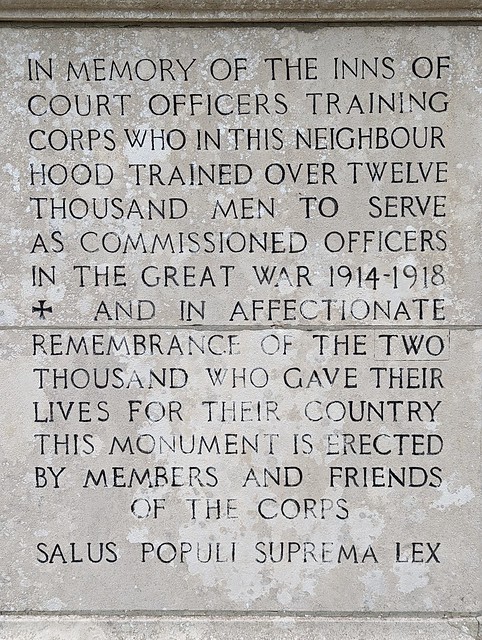
Salus populi suprema lex: the quote is from Cicero, and means The health (welfare, good, salvation, felicity) of the people should be the supreme law2. There's actually an extra "esto" you need to shove in to make good latin, but it kinda reads nicer without, or at least I presume that's what the people who made my monument1 thought. It is also the form that the Inns of Court use, and their latin is likely better than mine.

Like quite a lot of things, it sounds good, certainly good enough to write on a monument or use as your great seal. Nowadays, if you search for the phrase on Google your results fill up with fuckwitted colonials who think that taking the word "health" literally is amusing. Idiots. Anyway, where was I? Oh, yes...

It has a regrettably collectivist, as opposed to individualist, slant. The welfare of the entire populace demands that your individual rights should be overridden? Then over they go... You see the problem I hope. Or not even individual rights: taken literally, it offers the sovereign the ability to cast any specific law aside, in favour of the "supreme" law: in both early modern and classical contexts, salus populi was often used to justify the 'arbitrary' power of the sovereign, in the words of one random source I found on the internet. From context, and as this argues, the maxim is only supposed to apply in times of emergency; but alas people can be rather slippery about what counts as an emergency.

Will that do for now? Not one of my best, I know.

Refs


* Primitive communism by Manvir Singh via Econlib

Notes


1. On Berkhamstead common.

2. Partial context, from an archive of LoebIn the field they shall hold the supreme military power; they shall be subject to no one; the safety of the people shall be their highest law.

3. Which turns up much-delayed and mis-titled as Après ma mort, je ferai tomber une pluie de roses.

2022-04-14

Coronavirus days: tag, I'm it

PXL_20220413_094044942 I have finally been zapped. As far as I know, for the first time. As a 58-year-old male in good physical condition who has been Double-Vaxxed and Boosted, I feel no fear and indeed feel little in the way of ill effects: just an irritating sore throat and cough.

However the test means I am working from home to protect my co-workers, and not attending the Works Easter Do (postponed from the Christmas Do) this evening, which is regrettable. I am doubtful that my co-workers require any protection, any more than I do from them; anyone Vulnerable won't be in the office anyway. The official NHS advice that I find does recommend staying at home, but doesn't insist on it.

As it happened I went back to the Old Place yesterday, but didn't interact with anyone.

Update: two days later, still it, but more faintly. Cough much better, barely there.

2022-04-06

Digital technology supports decarbonisation only if appropriately governed (high confidence)?

PXL_20220404_205200117~2 I'm glancing over the IPCC AR6 WGIII SPM, and so far am unimpressed. This is a "summary for policymakers" by people who have forgotten what "summary" means and who have never worked with policymakers. FFS, I'm 14 pages in and they've barely said anything interesting; if I was a policymaker I'd throw it at my wonks and tell them to produce a real summary.

And then we get things like my headlike, which tells you that this is written by and for people who want to fiddle.

I imagine there is something of interest in there somewhere though, so I might read on.

2022-04-02

Frederick Engels Socialism: Utopian and Scientific

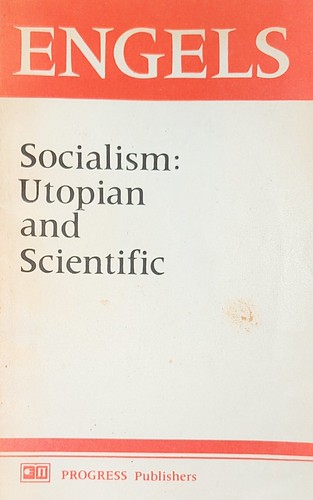
1648925514421-304e85a6-cade-4dc3-a079-9710d2d7d28b_ FFS, why am I reading this stuff? Mostly, because this slender pamphlet has turned up again in the chaos of our house move. If you're interested in an in-depth or - heavens forfend - sympathetic and knowledgeable review of this stuff, look elsewhere. I knew before I started that I was going to despise it, and only bothered read it to find out why. Should you wish to read the thing yourself, you can, courtesy of marxists.org. Wiki has an uninteresting article with no real analysis from which I'll leave you to find the historical context. My edition was printed in the late and distinctly unlamented USSR. 

As befits any kind of socialst work, it begins in factionalism: it was written as part of the forgotten conflict of Anti-Dühring. We then get large slabs of turgid historical analysis, some of it direct quotes from Marx himself. For example "The real progenitor of English materialism is Bacon. To him natural philosophy is the only true philosophy, and physics based upon the experience of the senses is the chiefest part of natural philosophy. Anaxagoras and his homoeomeriae, Democritus and his atoms, he often quotes as his authorities. According to him the senses are infallible and the source of all knowledge. All science is based on experience, and consists in subjecting the data furnished by the senses to a rational method of investigation." Which is all spiffy, but Democritus's atomism, though it turned out to be correct, had fuck all to do with observation; it was made-up like so much of antient Greek physics (see-also: Après ma mort, je ferai tomber une pluie de roses). So it is weird to see Engels uncritically quoting Marx apparently talking bollox. And all of it irrelevant to his purpose, as far as I can tell.

Engels is convinced that in "Dialectics" he has found some interesting and valuable new way of thinking. In attempted proof of which he attempts to co-op science: Nature is the proof of dialectics, and it must be said for modern science that it has furnished this proof with very rich materials increasingly daily, and thus has shown that, in the last resort, Nature works dialectically and not metaphysically; that she does not move in the eternal oneness of a perpetually recurring circle, but goes through a real historical evolution. In this connection, Darwin must be named before all others. He dealt the metaphysical conception of Nature the heaviest blow by his proof that all organic beings, plants, animals, and man himself, are the products of a process of evolution going on through millions of years. But, the naturalists, who have learned to think dialectically, are few and far between, and this conflict of the results of discovery with preconceived modes of thinking, explains the endless confusion now reigning in theoretical natural science, the despair of teachers as well as learners, of authors and readers alike. This is of course drivel. Dialectic is a discourse between two or more people holding different points of view about a subject but wishing to establish the truth through reasoned argumentation. Dialectic resembles debate, but the concept excludes subjective elements such as emotional appeal and the modern pejorative sense of rhetoric. But whilst the idea of striving for the truth by allowing different viewpoints to contend is indeed valuable, this isn't a lesson that communism managed to learn. And of course once you've found that truth dialectics loses its value; to expound what you know can be done linearly.

Just what is Socialism, though? I'm glad you asked, because big E has the answer: so now modern industry, in its complete development, comes into collision with the bounds within which the capitalist mode of production holds it confined. The new productive forces have already outgrown the capitalistic mode of using them. And this conflict between productive forces and modes of production is not a conflict engendered in the mind of man, like that between original sin and divine justice. It exists, in fact, objectively, outside us, independently of the will and actions even of the men that have brought it on. Modern Socialism is nothing but the reflex, in thought, of this conflict in fact; its ideal reflection in the minds, first, of the class directly suffering under it, the working class. I hope that makes it clear for you. Alas for me it doesn't, so I'm forced to think for myself. And what comes out, in quote after quote in the little pamphlet, is: socialism is not liking capitalism. You don't actually have to have any clear idea of what socialism actually is - towards the end, it turns into unicorns-farting-rainbows while the state withers away - but you do need to know what you hate; which is increasing prosperity.

2022-04-01

Lucia Liljegren is not notable

PXL_20220327_142510156 Those with long memories will remember Lucia Liljegren, though I don't think she figured much here. But! At least I care enough to note that she isn't notable: Wikipedia:Articles for deletion/Lucia Liljegren was closed as Delete. Is there anything else to say? I think not.

2022-03-16

Opinions alter, manners change, creeds rise and fall, but the moral law is written on the tablets of eternity

facebook_1647205111583_6908878988336532371 A quote, from Lord Acton. And apparently an inspiring one, since (inevitably in this day and age) you can get it on a fridge magnet. If Lord Acton's Philosophy of History by Crane Brinton in The Harvard Theological Review can be believed, it is the basis for his judgements of history; for his theory of history. But, is it true? I think not: from my conclusion there: morals, law and politics are under-determined by the defensible theoretical foundations. And thus, different people / groups build conflicting superstructures; and fail to realise that the bits they disagree about are the optional bits.

That it isn't true is likely going to be a problem for Acton, I suspect; though I haven't quite ground through the Liberty Fund edition of some of his works; so the exact nature of the flaw it causes in his reasoning is yet to be revealed. Acton was a staunch Catholic2, so I suspect (somewhat like Doubty Descartes) he managed to convince himself that all morality must necessarily equate to his church's morality.

I note that history, and recent history, teaches us that most problems don't arise from this little matter, but through much coarser problems of poor governance or poor thinking.

Refs


* Paul Graham explains philosophy. Note the "confusion over words" recalling Popper.
* DB: quote of the day, discussing Hayek: Perhaps, as seems to have happened today (as it has in the past), the people begin to distrust all claims to expertise and seek simpler, more intuitive, solutions.
* Is accurate forecasting of economic systems possible? An editorial comment; by Irene Scher & Jonathan G. Koomey
* Said Marcus Garvey, in urging blacks to undercut union wages as a means to employment and combating union racism, “the only convenient friend the Negro worker or laborer has in America at the present time is the white capitalist.” - via CH.
Idol Words - ACX.

Notes


1. My picture is from The freethinkers' pictorial text-book: showing the absurdity and untruthfulness of the Church's claim to be a divine and beneficent institution and revealing the abuses of a union of church and state by Heston, Watson.

2. Staunch in the faith, but at the same time believing in liberty, and hence implacably opposed to papal infallibility.

2022-03-11

The Evil Empire strikes

PXL_20220306_155325479 No doubt about where I stand, then1Ukraine: Work as if you live in the early days of a better nation kinda refers; it is interesting to review the comments there, especially: "The last thing Putin wants is another Chechnya or Afghanistan". I nearly wrote something when the Russkies were massing on the border, and then nearly wrote something soon after; but am able to resist no longer. Don't look for any informed analysis, mind you.

So, the situation: after massing troops on the border for "exercises" for months, the Evil Empire finally decided to invade Ukraine. And it seems to be going badly for them6: the expected swift progress has not materialised, the Ukrainians are fighting back, and the Cold West has gathered it's courage and imposed significant sanctions4 and handed over a few anti-aircraft and anti-tank weapons, which I support. The price of oil and wheat is up, but... well, we'll worry about that later. 

Many things are unclear, including why the Evil Empire decided to do this. Mostly, that means why Putin decided to do this: for it is a country almost without checks and balances, run - it would appear - by the whim of one man. And run badly2. I decline to speculate on exactly why they did this stupid thing; there are quite enough speculations out there already, feel free to pick your own. But the pattern - of an Evil Autocrat getting into power - is sadly all to common: Gaddafi, Assad, Putin3. It becomes clear that governance is hard, and perhaps we have been mislead by the success and growth of democracies in the last, say, century; it is all to easy to suppress the voices of the people.

Making predictions at this point is unwise, but I will express my hopes that the plucky Ukrainians remain plucky, and stall the Russkies for long enough for the assault to fall apart; this does not seem implausible. More tenuously, I could hope for Putin to be overthrown, but this seems unlikely; more realistically, for him to not escalate to implausible levels (nukes; or mass indiscriminate shelling of cities). The difficulty there is seeing what could be a plausible endgame: perhaps, the answer is that he, like his army, is not as formidable as appeared, and will retreat to oppressing his own people instead of someone else.

We have, unexpectedly, what is effectively the gift of a carbon tax7; but I don't see anyone being grateful. Am I grateful? Perhaps I am. The extra is going to those that pump oil not governments, but I don't find myself too bothered by that. That it is happening so suddenly, and it cannot be predicted how long it will last, is regrettable.

What is Putin afraid of?


The foolish rhetoric does, as usual, hide a kernel of truth: that Putin is afraid of Russia gradually failing, and happy joyful prosperous free market economies springing up around it. In the long run, Russian failure under Putin was inevitable, even before this stupid war.

Notes

1. Yes, I know: safely in England well away from any fighting.

2. I think that a country run without checks-and-balances by even one good man would be badly run, but Putin is without doubt not good, indeed he is bad.

3. Most of the Gulf States are hardly paragons of democracy and we prop them up, so I can't say the West is blameless in such matters either.

4. But see-also Bryan Caplan on sanctions. I'd like to think we could manage more imaginative policies like Make Desertion Fast but our leadership can't think fast in unexpected ways. Or perhaps even slowly.

5. My image is a reminder that hope - or at least rhubarb - springs eternal.

6. Hurrah! Nonetheless we must remember that it isn't the individual Russkies who are evil - mostly - it is the system they are trapped in. Although, if they could stop believing in dumb myths about pan-Russianism or whatever, that would help.

7. Except (2022/06) Ted Nordhaus: Russia’s War Is the End of Climate Policy as We Know It: Ironically, geopolitical strife and energy scarcity will do more for the climate than decades of ardent policies.
2022-03-05

The flower of poor thinking is to lack influence

Maggie Or, The First Step Toward Saving the Planet Is Ignoring the Economists by Andrew Dessler in Rolling Stone. You may well say that being published in Rolling Stone gives you more influence than a humble blogger and I would be forced to agree. So it goes.

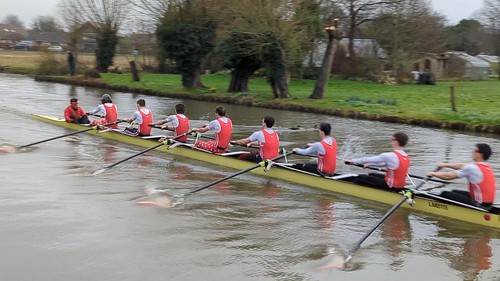
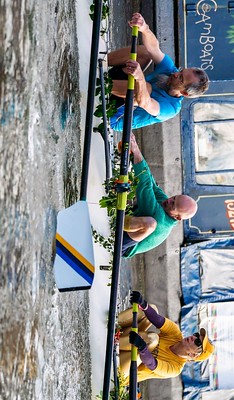
Speaking of how it goes, my picture shows LMBC rowing over comfortably ahead of Caius to retain the Lents headship. For connoisseurs of mud, the towpath was horrible, since it rained, lightly, almost all week. But despite the Covid-induced break, everyone seemed to remember how to bump.

The nub of AD's analysis is "The U.N.’s latest climate report shows that we don’t know how expensive the climate crisis will be, which means cost-benefit analyses weighing how to combat it are pointless". The new report is really quite long though, and AD doesn't provide any quote from it demonstrating that his assertion is true, so I think that very basic step can be regarded as Unproven (do feel free to provide a suitable quote in the comments). Furthermore, if we genuinely had no idea how expensive it would be, we would have no basis for action at all (a quote below shows this isn't true). However, let's assume that the IPCC (why has AD switched from "IPCC" to "UN"? Odd; perhaps he is trying to put off the right wing nutters) does indeed say that; why would it demonstrate that economic thinking, including CBA, is pointless? His end point is revealing in this regard: As the latest IPCC report says, “The cumulative scientific evidence is unequivocal: Climate change is a threat to human well-being and planetary health. Any further delay in concerted anticipatory global action on adaptation and mitigation will miss a brief and rapidly closing window of opportunity to secure a liveable and sustainable future for all.” Do we really need a cost-benefit analysis to convince ourselves to address this threat? Taken all that at face value, no, we don't need a CBA to decide to do something. But we do need a CBA to decide what to do. Because a large number of solutions from different people are proffered, and we cannot do them all; and many of them, whilst appearing brilliant and obvious to their proponents, appear stupid to others. How shall we decide what to do? Shall we just accept arbitrary diktak? Or should we do... that which involves least use of resources?

I have said this before - but cannot now find it, so will have to repeat myself - that avoiding economic thought is often a way of saying "do what I want". Which is generally bad.

AD's prime example of why CBA is bad is During the Obama administration, the social cost of carbon... was estimated to be $35.  The Trump administration altered some of the assumptions that led to his estimate, particularly how much they valued future generations versus ours, and how much they valued people outside the U.S. versus those who live in America. They estimated the social cost of carbon to be as low as $1. But this was politics, not economics. Calling CBA bad because of Trump is just dumb.

Is there any virtue to AD's piece at all? If there is, it isn't the quoting Franta bit. His discussion of "Obama’s climate bill" isn't great either: although, as he notes, some made hyperbolic claims about the costs, he is firstly wrong to attribute those claims to economists: they were made by pols. Secondly, he is wrong to assert that reality disproved those claims: since the bill didn't come into action, we'll never know what costs it would have had. Thirdly, as he mentions but doesn't think about, even without the bill the aims of the bill were achieved. So all those making hyperbolic claims about how necessary the bill were, have been proved wrong by reality. My guess is that AD would have been one of those people, but I can't be bothered to find out.

Refs

* The flower of justice is peace

Make Desertion Fast by Bryan Caplan

* A Populist Attack on Big Tech by David Henderson

* Not So SWIFT by David Henderson; A SWIFT and sure way to punish Russia by Scott Sumner

"It could be said of democracy that all theory was against it and all experience for it." - TF

* What Should Economists Do Now? by Mikayla Novak

The Age of the Judicial Thoroughbred aka Benjamin Barton’s The Credentialed Court.

Should we care about the world after 2100?

The ETS is stupid, part n

Waging the War of Ideas, via What the EA community can learn from the rise of the neoliberals, via ACX.

The Actual Food Problem - via Timmy. Not sure it is, but "fertiliser used to be 55 per cent of the cost of his business, but will now be near to 80 per cent..." is interesting.

Oxford’s Sustainable Law Programme establishes the Climate Litigation Lab

2022-02-28

Meeting the objectives of climate resilient development requires society and ecosystems to move over (transition) to a more resilient state?

The new WGII report is out, and reading the SPM it doesn't take long before I find something to disagree with: Meeting the objectives of climate resilient development thereby supporting human, ecosystem and planetary health, as well as human well-being, requires society and ecosystems to move over (transition) to a more resilient state. Firstly the trivia: having to write "move over (transition)" is horrible; get someone to sort out your flow. Disregarding that ugliness, there's the substance: is any kind of fundamental transition to a new state required? I doubt it; though all the words used are so vague that they could mean almost anything. Swapping out fossil fuel infrastructure for renewables/nooks doesn't really meet this description, no matter how much some people would devoutly wish it to be so.

It is kinda funny watching the IPCC folk saying "don't watch that war over there, watch our report on the long term future on the planet". If I were them I'd have delayed releasing it, but bureaucracy doesn't work like that.

Refs

Greenhouse gases and “major questions”: Justices to hear argument on EPA’s power to tackle climate change - SCOTUSblog.

* I took the fundamental bit to be "reducing supply too fast will lead to bad price spikes", and I think that's correct; and I see a lot of env folk not understanding it. The rest, meh.


2022-02-19

The flower of justice is peace

Ann Leckie, Ancillary Justice, of course. And The flower of propriety is beauty in thought and action. After that it goes a bit wacky but it is good that far. Not something my younger self would have liked. It is perhaps a little early but I wonder if the lack-of-concern for gender is a dig at, or a reaction to, some of the modern wokeness? Anyway, none of that is what I wanted to say, which was really to natter about fusion for a bit, since it is in the news and I really ought to write at least something in February.

So how about Magnetic control of tokamak plasmas through deep reinforcement learning? This seems dead impressive to me, but what do I know. Having trained it up, it was run on the Tokamak à configuration variable and seems to have done well. Something like this - by which I mean, more intelligence rather than just more power - seems to me the kind of kicking that fusion needs, if it is ever to go anywhere. Or in a different way, as Paul Graham saidAnother sign that fusion is really coming this time is the sense that there's a race happening. One never felt that in the days when fusion was perpetually 30 years in the future. Not that there isn't rather a lot still to do, like actually extracting energy; and a fair chance that solar will just supply what we need before fusion is finished.


Notes

1. The picture is Winter Landscape by Valerius de Saedeleer via TF. A gloomy sort it would seem.

Refs

when a governmental institution is given a categorical mandate – whether to deal with pollutants, discrimination, crime, homelessness or other problems – the incentives are not the same as when private individuals or private organizations face an incremental problem requiring an expenditure of their own money, as distinguished from spending taxpayers’s money... CH.

* We are to conceive of courtesy as the poetry of conduct, an 'unbought grace of life' which makes its possessor immediately loveable to all who meet him, and which is the bloom (as Aristotle would say)-the supervenient perfection-on the virtues of charity and humility. Lewis, The Allegory of Love, p352.

2022-01-28

McKinsey: fundamental transformation of global economy needed for net zero

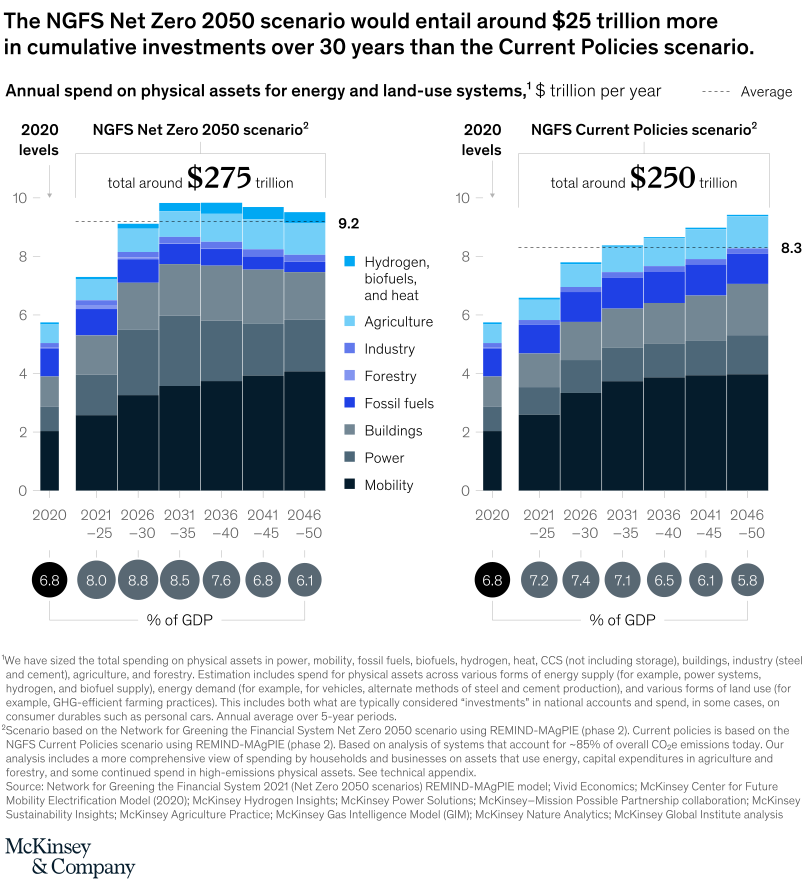
Is a report from McKinsey, according to the Graun. Normally I think McK would be evil multi-national consultants, but here they're saying what the Graun wants to print, so they're fine. Reaching net zero climate emissions by 2050 will require a “fundamental transformation of the global economy”... estimates that $9.2tn will need to be invested every year for decades to limit the global temperature rise to 1.5C and end the climate emergency. The sum is a 60% increase on current investment levels and equivalent to half of global corporate profits. And, says McK itself, and one-quarter of total tax revenue in 2020, 15 percent of gross fixed capital formation, and 7 percent of household spending.

McK provide a large number of words and lots of numbers that I have no intention of reading unless someone forces me; I'm more interested in the broad-brush question of whether this is all plausible. Current world GDP is about $81T, so on their numbers they are asking for more than 10% of GDP investing in green transition (there may be some GDP-keeps-growing stuff in there, though, because their own calculation is more like 7.5%)1.

Anyway, I don't want to pretend to analyse this stuff in detail, just draw attention to it; because these numbers seem a little on the high side to be practical, to me.

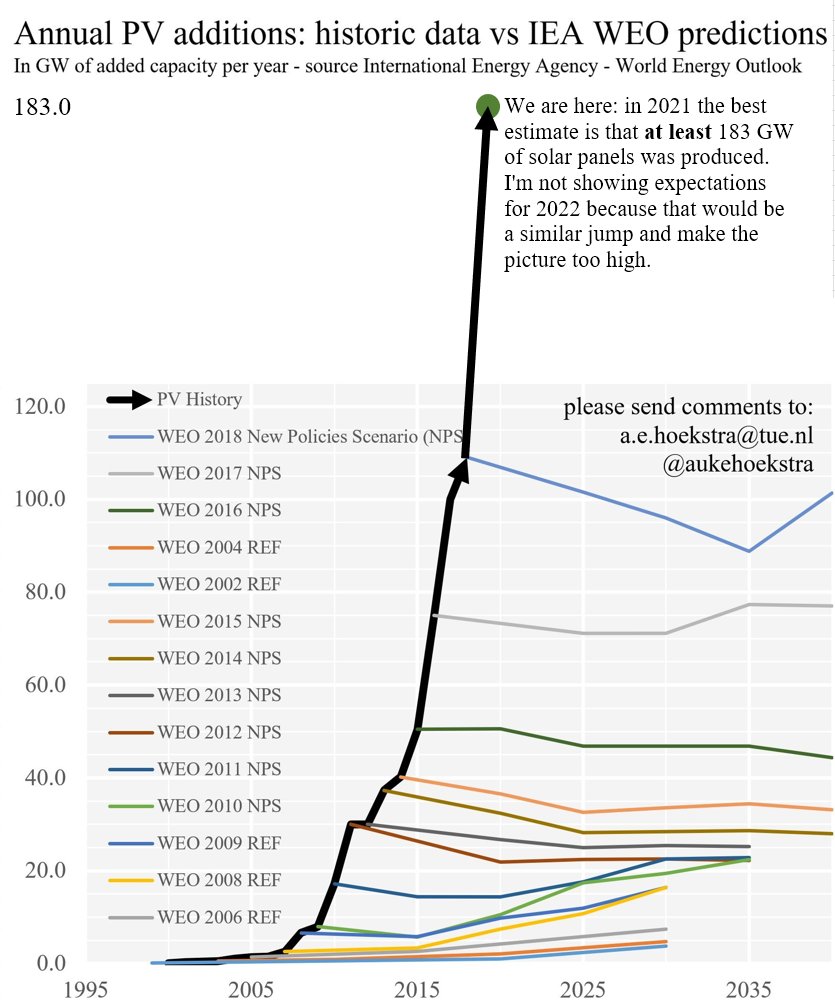
On a more cheerful note, Auke Hoekstra has revised his PV-actually-built-vs-projections graph, and once again the actually-built way exceeds projections. This is my hope.

Notes

1. If you think their numbers are larger than some others, you are probably right. They explain: Other research to date has largely focused on estimating required energy investment. Here we expand this to include additional spending categories such as assets that use energy (for example, the full cost of passenger cars and heat pumps), capital expenditures in agriculture and forestry, and some continued spend in high-emissions physical assets like fossil fuel–based vehicles and power assets. As a result, our estimates exceed to a meaningful degree the $3 trillion to $4.5 trillion of annual spending for the net-zero transition that others have estimated.

Refs

What is Market Urbanism?

Nuclear power and renewable energy are both associated with national decarbonization - bit weird this needs saying, but you know some people. This is a response to Sovacool, who appears to have form.

* Hanania Highlights by Bryan Caplan: Public Choice Theory and the Illusion of Grand Strategy and Sanctions and Asylum.

If writing down your ideas always makes them more precise and more complete, then no one who hasn't written about a topic has fully formed ideas about it. And someone who never writes has no fully formed ideas about anything nontrivial - Paul Graham.

* Ford and GM: Bearers of Socialist Culture? by Pierre Lemieux.

Marmalade Training Camp - JEB

Overestimating the Human Influence on the Economic Costs of Extreme Weather Events - Patrick T. Brown critiquing the "Fraction of Attributable Risk" of Myles Allen (2003) used in Frame (2020) for Harvey; via Twatter.

* R E S T A R T I N G UK SHALE GAS by Tim Worstall via the Evil NetZeroWatch people.

Link blog: docker, container - Paul Wright

Should We Expect More from Our Elected Officials? - Volokh, 2018.

Legal Systems Very Different from Ours

Australia's biggest coal-fired power plant to shut in 2025

2022-01-24

Climate blogging in a post-truth era: Opportunities for action and interaction

PXL_20220114_114839830 A thesis, by Georgios Zoukas. Even though it has my name in it, I didn't read it all I'm afraid. Still, it is close to The dim and distant history of climate blogging.

As it says, The analysis shows that the main purpose that the mainstream scientist produced climate blogs appear to have in common consists in filling  the information gap existing in the communication of climate change and addressing the mis/disinformation disseminated through the mainstream media and the internet. Which is fair, and probably shows you why such blogs are declining: pretty well everyone now accepts the physical science as expounded by the IPCC, except the outright nutters, and most sane people have stopped caring about them.

Refs


* Inflation Is Still Too Low by Bryan Caplan

2022-01-12

Mind-gargling ignorance just doesn't aid in saving the planet

PXL_20220108_151520207 It's a Timmy-vs-Georgie fight; I know who my money is on. Monbiot's starter is here (or was; the clowns have moved it to here5) and Timmy's reply is here. Let's hope he has cleaned up his HTML by the time you come to look. If, that is, you can bear to pollute your browsing history. Perhaps you prefer a safe archive?

Anyway, exactly what GM's brilliant idea to save the planet is I don't know, because I didn't bother to watch to the end; what I'm interested in is shamelessly repeating Timmy's argument, because GM's idea / analogy is all too common. It is, stripped down: during the 2008 banking crisis we urgently threw money at the problem; if we were to take Global Warming seriously we would urgently throw money at... something. This is an argument designed to appeal to greed and envy, and to trigger our sense of fairness3.

But as Timmy points out, the banking crisis was, errm, a banking crisis. The problem was money, and so the solution was money2. That isn't true of GW. You can, if you like, say that the problem is Capitalism1; but even so, the problem still isn't money. Indeed, as Timmy points out, one way to interpret GM's stuff is that his solution is less economy: we should all consume less. So the solution is... less money; well, no. The solution is directing our economy towards lower CO2 emissions, and doing so in an efficient fashion, because more efficiency means less CO24. Also known as carbon taxes.

Refs

* Ain't no use in prayin' That's the way it's stayin', baby / Johnny ain't so crazy He's always got a line for the ladies.

* Priests and cannibals, prehistoric animals / Everybody happy as the dead come home.

The Myth of the Myth of the Lone Genius.

* Two types of environmentalism by Scott Sumner.

Stalin Allowed The Proles To See The Grapes Of Wrath.

Do Climate Models predict Extreme Weather? - Sabine Hossenfelder.

In Praise of Jurisdictional Competition - DB.

PLANTING MEGALITHS TO THWART WIND POWER.

Tema Okun's "White Supremacy Culture" work is bad.

* The Best Argument Against School Closures by Bryan Caplan.

* Catering to People's Needs by Pierre Lemieux.

Notes

1. FWIW, I don't think that is a good diagnosis, except to the extent that C has enabled us to grow so much richer that we're capable of causing problems like this.

2. Of course, that doesn't imply that what was done was optimal, or even correct; but that's another matter.

3. GM gets rather loathesome about this around 5:26. Why, he wonders, do pols not do what he wants? His speculation as to why is all you'd expect from him and his ilk: that the pols are corrupt and moneyed interests want otherwise. But whilst money is important, so are votes: if voters wanted their money spent by govts fixing GW, it would be done. But they don't. And they are aided and abetted in this by pols and the likes of GM.

4. Alas, the squareheads are having a hard time with this idea.

5. Amusingly the URL has changed from h"how-the-number-25-can-save-the-world" to "the-tipping-point-that-will-destroy-the-world". I should probably also add that GM is rabbiting on about science that he doesn't understand and that is pretty dubious.

2022-01-10

Climate change: Small army of volunteers keeping deniers off Wikipedia?

IMG_20220108_144354_010 So says Aunty. Or Wikipedia has for so long been plagued by climate change denial. But a group of dedicated volunteers around the world is working tirelessly to keep the deniers at bay. Or They [Denialist's]'ve been waging an editing war to get their views across. But it isn't true.

It was true years ago. See The dim and distant history of Global Warming on Wiki: the GW wars. But that was more than a decade ago. Since then the denialists on wiki are a spent force; indeed, there aren't really any denialists; we have more trouble with enthusiastic but not quite competent people trying to improve things like the Greenhouse effect. Or, jut, articles that no-one gets round to fixing. For myself, I haven't touched the Global Warming article since the clowns decided to rename it Climate Change. Instead, what seems to have happened is that the true nutters - the WUWT type folk - have instead in their own minds innoculated themselves (how ironic) against wiki, and decided that they don't care what it says.

Nowadays we get nutters one at a time, who make a few perfunctory edits, get reverted, and are never heard from again.

I probably sound bitter and twisted, because they didn't interview me. Well I am bitter and twisted, of course, but not because of that. I corresponded with the nice MS, but preferred not to be interviewed; although that may have been a different project.

Refs

* The Good Group by Bryan Caplan

2022-01-04

Two views of democracy

PXL_20220102_140852070 Taken from Joseph "Creative Destruction" Schumpeter's classic "Capitalism, Socialism and Democracy", about which I shall have more to say later. But this is just about one aspect, largely ignored in the wiki article to which I lunk: the definition of democracy1. Should you be unfamiliar with this work it is available here; the relevant chapters are XXI and XXII, in which he provides firstly the "classical" definition and then his alternative.

He offers two definitions of the democratic method, which is that institutional arrangement for arriving at political decisions... in the "classical" case
...which realizes the common good by making the people itself decide issues through the election of individuals who are to assemble in order to carry out its will
and his alternate is:
...in which individuals acquire the power to decide by means of a competitive struggle for the people’s vote.
The classical definition is of course the one that people feel allegiance to, will go to the barricades for, and so on. The alternate, we immeadiately see, is more realistic. If I now go and look at the wiki article I get Democracy... is a form of government in which the people ... to choose governing officials to [deliberate and decide legislation]... Cornerstones of democracy include freedom of assembly, association and speech, inclusiveness and equality, citizenship, consent of the governed, voting rights, freedom from unwarranted governmental deprivation of the right to life and liberty, and minority rights. Later, in the "theory" section, there is a somewhat confused discussion. Although wiki lists some "cornerstones" we should note that although these are largely preconditions for democracy, they have no unique connection to it: it is easy to imagine an autocracy that offered most of them.

That's mostly it for this post; I could analyse further but you take the point, I'm sure; and if you want further analysis, I've pointed you to the text. This is a good point to note that I don't believe in the Will of the People; per for example this. I will confess that you an re-write the "classical" defn above to get rid of some but not all of the WOTP bits2.

Update: and Brexit


I don't want to derail this with Brexit ranting, but I think it is interesting to consider Brexit in this context. The point being that "compete for votes" very often turns into the major political parties taking opposite stances upon issues-de-jour. Which, in turn, generally means that you-the-voter have a way of choosing between those issues. Admittedly, it is crude: you get one choice to represent all the choices; but when one issue is overwhelmingly important, it works. Which is why Brexit is anomalous: both Labour and The Tories are currently in favour of make-Brexit-work; the Lib Dems offer (archWe’re consulting on our next steps laying out our approach to the UK’s relationship with the EU.

Refs


Notes


1. We are all aware that definitions, per Popper, need to be considered in practical rather than Platonic terms to have any use.
2. I can manage by making the people itself decide issues through the election of individuals who are to assemble in order to carry out (their) will(s), which erases "the common good" at the expense of losing any purpose; but can't quite erase the ghost of the WOTP. I ought to confess that when young and foolish I have used the phrase myself; if you care enough to press me I will bring the two into conformance.

2021-12-31

Happy New Stoat

It's that time again; the calendar rolls around and I look back over the year and feel old. My major life-event for the year was switching jobs, from Qualcomm to Roku, with a trip to the MonteRosaGruppe in the gap. This year I present the top-posts-by-month-by-number-of-comments in an exciting graphical format. Reading over what I wrote I realise how wise I was; and how little I seem to agree with my commentators; I must hope that my lurkers think differently. Speaking of which, Happy New Year, and do feel free to leave Seasons Greetings in the comments.

IMG_20210101_211331_410 loft-chimmney-tiles doughnut claw-of-the-conciliator
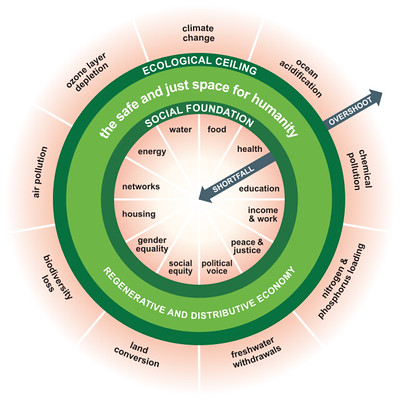
Jan - All this fuss over one dickhead (80) Feb - The Tyranny of Merit? (69) Mar - Doughnut Economics (23) Apr - Equity Isn’t Just Ethical, It’s Stupid (26)
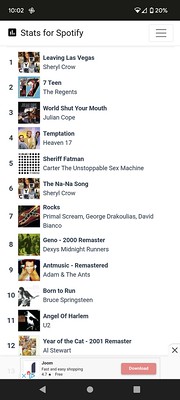
PXL_20210516_112750999~2 bc1fc476-3108-48bc-b6d3-b09ed916e40b_IMG_20210622_144550_110 Julian Cope crocodile
Twenty firms produce 55% of world’s plastic waste, report reveals? (22) Separation of powers (19) Book Review: The Righteous Mind (12) Afghanistan (28)
roku tomatoes bigger-tomatoes 1638386151398-80c692d5-93a9-429f-a37e-cae6a182b848_christmas-head
Book review: Climate Shlock (18) Please Don't Give Up On Having Kids Because Of Climate Change? (8) Equilibrium climate sensitivity is... (49) McTaggart on Time and A Research Strategy for Ocean-based Carbon Dioxide Removal and Sequestration (5)
From the other blog, various book and film reviews that migth be of interest: (new) DuneWhite Queen; Time Bandits; Nemesis (Asimov)Moby Fucking Dick; or, The WailTill we have faces (Lewis); The HobbitColonialism, the Golden Years; LabyrinthsEuthyphro; ShikastaOut of the Silent Planet / Perelandra / That Hideous Strength; Lord of the Rings; Time RegainedThe Languages of PaoWhat Makes You Not a BuddhistH G Wells anthology (WOTW; TTM); Our fate moves invisibly! A mystery; I, Robot; Beasts; Foundation; Neuromancer; Swallows and Amazons; Madame Swann at Home; The Iron Dream; Engine Summer; The Communist Manifesto; Across Realtime; The Cadwal Trilogy: Araminta station; Ecce and Old Earth; Throy; The Silver Chair and Dawn TreaderRowan Williams, The Way of St Benedict.

Screenshot_20211231-220259 Possibly also: The hut on chicken's legs.

Refs

BATTER my heart, three person’d God (2020)

You ain't ever gonna burn my heart out (2019)

* The lyf so short, the craft so longe to lerne (2018)

Goe, and catche a falling starr

2021: A year in review - ATTP

* Martin Rundkvist is Relatively Woke (in my world, anyone self-declaring as a Marxist is a nutter, but MR definitely isn't, so that's OK, errm).

2021-12-23

Coronavirus days: Omicron

PXL_20211217_183113241 Did you know that Omicron means little-o, just as Omega means big-o? Obvious really. Anyway, with Covid surging and Christmas nearly upon us it is time for another post. Not that I have anything to say; this is merely a post-for-my-record so that when I look back, I'll know how things seemed then. 

My last post was in May on the Lab Leak theory. That continues to rumble around but people pay little attention. Lack of any further post since then is due to there not being much to say. Indeed Covid makes little impact on my life, in most ways. Perhaps the major one is that the office is rather quiet: I'm working-from-work, but many others are not; one of many instances where people are making up their own minds, rather than having to follow strict rules. Of course Omicron may well upset all that, depending on how bad it gets. James has a preview. What will happen seems unclear to me: it is very transmissible, but perhaps less severe, and anyway anyone sane is now vaccinated and most are boosted. Certainly the govt is quietly hoping that all will be well, and any new restrictions can be delayed until after Christmas; and I'm happy with that. UK cases are shooting up but deaths are not. And there are strong regional variations, with London worst.

The manager of The Plough in Coton, where we go to drink on Friday nights, was two weeks ago complaining about the vast number of cancellations he had had stretching into January. But on the other hand, last Friday we couldn't even get in because of a private party there, so he can't be doing that badly. So we went to the Blue Ball in Grantchester (see pic) which is in many ways a cuter place. And it has Adnams.

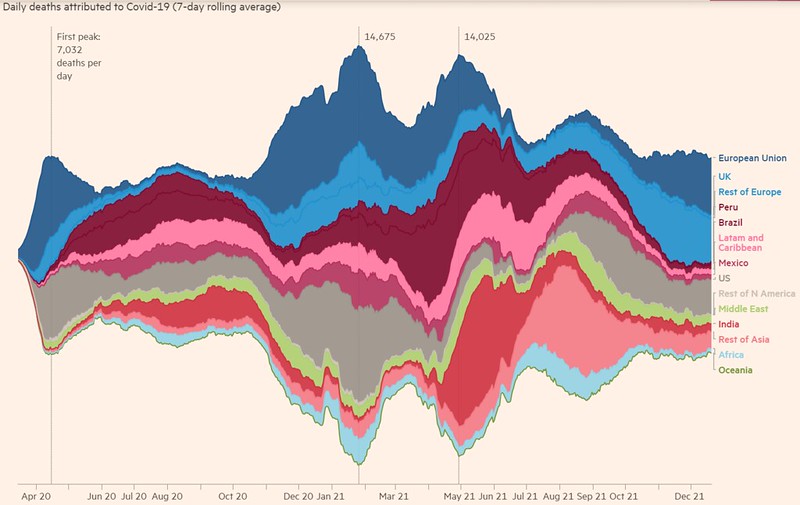
Here's the FT's overall pic:

o

Which I use as support for my general feeling of meh. It flares up in one place and down in another. Whether China will have to abandon its zero-Covid in the light of Omicron indicents is an interesting question.

Over on the politics side, well, there is still lots of politics but somehow it all seems rather unimportant. Every now and then people remind us that getting vaccines to the poor world would be a good idea; but attempting to say they should get priority over rich world boosters is clearly doomed, and is only ritual.

Refs

* Omicron Less Severe Than Delta, But More Contagious - DA.

Ted Nordhaus on how green activists mislead and hold back progress - Economist.

How do scientists assess policy-relevant risks? - Ed Hawkins.

2021-12-11

Two quotes from Leviathan

PXL_20211210_210937610 From chapter 30: And because, if the essentiall Rights of Soveraignty (specified before in the eighteenth Chapter) be taken away, the Common-wealth is thereby dissolved, and every man returneth into the condition, and calamity of a warre with every other man, (which is the greatest evill that can happen in this life;) it is the Office of the Soveraign, to maintain those Rights entire... it is against his duty, to let the people be ignorant, or mis-in-formed of the grounds, and reasons of those his essentiall Rights; because thereby men are easie to be seduced, and drawn to resist him, when the Common-wealth shall require their use and exercise. And the grounds of these Rights, have the rather need to be diligently, and truly taught; because they cannot be maintained by any Civill Law, or terrour of legal punishment. For a Civill Law, that shall forbid Rebellion, (and such is all resistance to the essentiall Rights of Soveraignty,) is not (as a Civill Law) any obligation, but by vertue onely of the Law of Nature, that forbiddeth the violation of Faith; which naturall obligation if men know not, they cannot know the Right of any Law the Soveraign maketh. And for the Punishment, they take it but for an act of Hostility; which when they think they have strength enough, they will endeavour by acts of Hostility, to avoyd. My bold.

And later on: Good Lawes What: To the care of the Soveraign, belongeth the making of Good Lawes. But what is a good Law? By a Good Law, I mean not a Just Law: for no Law can be Unjust.... Such As Are Necessary: For the use of Lawes, (which are but Rules Authorised) is not to bind the People from all Voluntary actions; but to direct and keep them in such a motion, as not to hurt themselves by their own impetuous desires, rashnesse, or indiscretion, as Hedges are set, not to stop Travellers, but to keep them in the way.  And therefore a Law that is not Needfull, having not the true End of a Law, is not Good. Such As Are Perspicuous: The Perspicuity, consisteth not so much in the words of the Law it selfe, as in a Declaration of the Causes, and Motives, for which it was made. That is it, that shewes us the meaning of the Legislator, and the meaning of the Legislator known, the Law is more easily understood by few, than many words. For all words, are subject to ambiguity; and therefore multiplication of words in the body of the Law, is multiplication of ambiguity: Besides it seems to imply, (by too much diligence,) that whosoever can evade the words, is without the compasse of the Law. And this is a cause of many unnecessary Processes. For when I consider how short were the Lawes of antient times; and how they grew by degrees still longer; me thinks I see a contention between the Penners, and Pleaders of the Law; the former seeking to circumscribe the later; and the later to evade their circumscriptions; and that the Pleaders have got the Victory. It belongeth therefore to the Office of a Legislator, (such as is in all Common-wealths the Supreme Representative, be it one Man, or an Assembly,) to make the reason Perspicuous, why the Law was made; and the Body of the Law it selfe, as short, but in as proper, and significant termes, as may be.

Perhaps I have allowed myself more than two quotes. But both sre strikingly against modern practice. Hobbes clearly sees a need to educate the populace in the need for and meaning behind the laws. Yet while there are people who argue for this nowadays, it is neglected; certainly in England. For the second, Hobbes is keen on the meaning behind the laws rather than the exact wording. There is more than could be drawn out, but I'm sure you see the meaning yourself; and if you don't, I doubt I can help. Yes, this post is more for my benefit to store these quotes than for yours.

Refs

AD STUDY SHOWS EXXON KNEW ABOUT BIOFUELS IN 1959.

* Gordon Tullock on paying for higher education.

* Rule(s) of Law(s): The problem is monopoly, not violence by Michael Munger.

The ‘Greed’ Fallacy - CH

* CORONAVIRUS: Against Faucism

2021-12-10

An International Institute Will Help Us Manage Climate Change?

PXL_20211205_095610540 Or so assert Sabine Hossenfelder and Tim Palmer. TP at least has some form in this stuff; SH rather less so; perhaps she is going for Publik Interlectewal status a-la ATTP? This is her second climate-y thing in SA with TP; the first was on a similar topic. Of course she has an entree there as a sane physicist and has on-topic articles back to 2015.

Anyway, what do she and TP want? They advocate 

the establishment of a federated international institute for climate prediction, much like CERN, the multinational collaborative particle physics laboratory. The institute would comprise several hubs in different countries, each with dedicated exaflop (one billion billion calculations per second) supercomputing facilities. The centerpiece of the institute would be the creation of a small number of ultrahigh-resolution climate models...

and so on. Does this make sense? Probably not. But the current situation of everybody having their own pet model no matter how rubbish also doesn't really make sense... at least, not in scientific terms. In politics-of-science terms it of course makes perfect sense. And indeed we do want a reasonable number of genuinely mostly independent models. And (they mention ECMWF, so they know this) ECMWF hasn't killed off national weather forecasts from anyone who has their own, though it may have stopped some people bothering to create them. To front-run some of the inevitable pork-barrelling, they suggest six hubs around the world for this "institute", which everyone could have fun fighting for.

Their main complaint and hence presumably the main purpose of all this is rez; A model with a resolution on the kilometer scale, as could be developed at an international institute, would not entirely eliminate this problem of structural error, but it would significantly alleviate it... but are then forced to confess The Destination Earth project, funded by the E.U. Green Deal, will shortly be undertaking important work in developing a prototype kilometer-scale climate model. Other projects to develop kilometer-scale models are beginning around the world. So if all this would do would be to speed things up by a few years, is it worth the money and effort?

The main argument is very much WG1 stuff: better (physical) models. When I read just the title, I thought they were, somewhat more sensibly, arguing for more cross-disciplinary stuff; but no. FWIW, I'm in the "we already know the WG1 well enough, compared to uncertainties elsewhere, but shouldn't stop doing WG1 stuff" camp. "shouldn't stop doing" doesn't imply simply drudging along familiar pathways and doing nothing new; but I'm pretty sure their proposed $1-2B/yr could be better spent.

Finally, although I disagree with the main argument it is mostly sane, unlike their None of the extreme events of 2021 can be simulated in current climate models, because the events were simply too extreme for the models which I think makes no sense. Those events are indeed puzzling; and AFAIK don't replicate in current models; but again AFAIK no-one has suggested model rez as the reason. They also ask How can a country prioritize its spending without knowing which is the more pressing threat: increased flooding and storms, or increased heat waves and drought? but don't extend the question to all the other things a country might wish to spend money on. And I doubt people are going to get good answers to those questions in the near future anyway.


2021-12-08

A Research Strategy for Ocean-based Carbon Dioxide Removal and Sequestration

51733385119_ac259b3ac0_o A Research Strategy for Ocean-based Carbon Dioxide Removal and Sequestration is a report from the USAnian National Academies of Sciences, Engineering, and Medicine. Apparently, they did a report in 2019 to provide a research agenda for advancing [Carbon dioxide removal] and, specifically, for assessing the benefits, risks, and sustainable scale potential for a variety of land- and coastal-based CDR approaches. The study found that, to meet climate goals, some form of CDR will likely be needed to remove roughly 10 Gt CO2/yr by mid-century and 20 Gt CO2/yr by the end of the century. To help meet that goal, four land-based CDR approaches are ready for large-scale deployment: afforestation / reforestation, changes in forest management, uptake and storage by agricultural soils, and bioenergy with carbon capture and storage, based on the potential to remove carbon at costs below $100/t CO2. I missed that, and my prior is that CDR is significantly more expensive that $100/t so perhaps I need to update my priors. Anyway, that was the land report, this is the ocean report. There was a solar geoeng one a half year back, which I barely skimmed, instead concentrating perhaps wrongly on the silly overreactions of some Big Knobs.

What did they consider? Here I'll list their starting points, together with my haven't-read-the-report reactions.

Nutrient fertilization (Chapter 3): Addition of micronutrients (e.g., iron) and/or macronutrients (e.g., phosphorus or nitrogen) to the surface ocean may in some settings increase photosynthesis by marine phytoplankton and can thus enhance uptake of CO2 and transfer of organic carbon to the deep sea where it can be sequestered for timescales of a century or longer. As such, nutrient fertilization essentially locally enhances the natural ocean biological carbon pump using energy from the sun, and in the case of iron, relatively small amounts are needed. 

WMC: seems sane.

Artificial upwelling and downwelling (Chapter 4): Artificial upwelling is a process whereby water from depths that are generally cooler and more nutrient and carbon dioxide rich than surface waters is pumped into the surface ocean. Artificial upwelling has been suggested as a means to generate increased localized primary production and ultimately export production and net CO2 removal. Artificial downwelling is the downward transport of surface water; this activity has been suggested as a mechanism to counteract eutrophication and hypoxia in coastal regions by increasing ventilation below the pycnocline and as a means to carry carbon into the deep ocean. 

WMC: sounds a bit mad to me.

Seaweed cultivation (Chapter 5): The process of producing macrophyte organic carbon biomass via photosynthesis and transporting that carbon into a carbon reservoir removes CO2 from the upper ocean. Large-scale farming of macrophytes (seaweed) can act as a CDR approach by transporting organic carbon to the deep sea or into sediments. 

WMC: also a bit wild-eyed but perhaps possible.

Recovery of ocean and coastal ecosystems (Chapter 6): Carbon dioxide removal and sequestration through protection and restoration of coastal ecosystems, such as kelp forests and free-floating Sargassum, and the recovery of fishes, whales, and other animals in the oceans. 

WMC: sounds rather limited.

Ocean alkalinity enhancement (Chapter 7): Chemical alteration of seawater chemistry via addition of alkalinity through various mechanisms including enhanced mineral weathering and electrochemical or thermal reactions releasing alkalinity to the ocean, with the ultimate aim of removing CO2 from the atmosphere. 

WMC: really?

Electrochemical approaches (Chapter 8): Removal of CO2 or enhancement of the storage capacity of CO2 in seawater (e.g., in the form of ions, or mineral carbonates) by enhancing its acidity, or alkalinity, respectively. These approaches exploit the pH-dependent solubility of CO2 by passage of an electric current through water, which by inducing water splitting (“electrolysis”), changes its pH in a confined reaction environment. As one example, ocean alkalinity enhancement may be accomplished by electrochemical approaches. 

WMC: sounds expensive.

Immeadiately after this is their key take-home message in the form of table S1 on pages 18-21. At least I hope it is, then I can stop reading early. Unfortunately, despite the need they assess for ~20 Gt/y, their "scalability high" is only "more than 1 Gt/y". But happily, that knocks out half of the ideas, leaving only fertilisation, alkalinity, and electrochemical. Coming to cost, of those three only fertilisation comes at under $100, so we have a winner. Well, that was quick.

What do you mean we're not finished? Well, of course not: these are people looking for research funds. Even hopeless ideas will still get something, of course. And at this stage that isn't too silly. Although why they want to shovel the most money at the weird electrochem stuff I don't know.

Although the fertilisation stuff is, as you'd expect, mostly about iron the PR puff says Nutrient Fertilization — This approach adds nutrients such as phosphorus or nitrogen to the ocean surface and mentions iron nowhere, which makes me doubt their good faith. The PR fluff is also careful to avoid any mention of scalability or relative cost of the different approaches.

The recommendations tip-toe around, both to avoid treading on anyone's toes by closing off people's pet ideas, and desperately (and pointlessly) trying to stop the zealots from screaming at them. Recommendation 3, includes "Research agenda that emphasizes advancing understanding of ocean fertilization, seaweed cultivation, and ocean alkalinity enhancement" which is a bit odd; it isn't clear to me why they picked those three.

So, in the end, meh: yes, you shoud do some reseach.

Notes


1. Pic by Nordin Catic at the Christmas Head. We're a scratch mixed VIII.

Refs


* Such evidence of arrogance, incompetence and poor judgment would reflect badly on any government - the Economist on Bojo the Clown.